This is a collection of reviews covering three of the self-editing books I’ve read in 2026 so far 🙂 Enjoy!
Review of The Ultimate Guide to Editing your Novel by Sara Grant
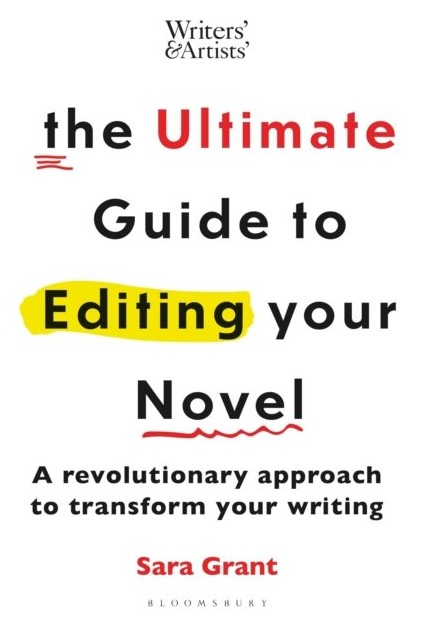
Description:
“When it comes to creating children’s and YA fiction there is often a focus on how to start and write until you reach an ending … But what happens when you have a finished manuscript of hundreds of pages? How do you transform your rough draft into a publishable one?
Expert author, editor, mentor and lecturer Sara Grant provides the answer through a systematic approach to editing. Her step-by-step guide demystifies the process of preparing a manuscript for submission to agents and publishers or for those self-publishing. It is a lifeline for new writers and those intimidated by the world of publishing; for more experienced writers it is an invaluable diagnostic tool to dip in and out of.
This practical workbook includes exercises and examples for:
– Interrogating your idea
– Enhancing your plot
– Scrutinising characters, chapters and scenes
– Analysing sentence and word choice
– Honing your unique voice
– Writing with sensitivity for young readers
– And finally, polishing your manuscript for submission.”
My review:
I am giving this book a rating of 5 out of 5.
A fantastic resource for every author!
I read through this book in one go prior to following the editorial process within, because I wanted to get a general idea as to the advice I should expect. That is something I’d suggest you do, especially if you’re working on a manuscript that’s already been through a couple of rounds of editing (which was my case when reading this book!). That way, you’ve read each chapter and understood every section, allowing you to select the next phase of your edit accordingly.
This book is packed with ample advice! However, at times, the questions the author suggests you ask yourself can be overwhelming (and the reason I almost gave it a 4 out of 5), which is probably why this is intended as a resource to dip in and out of – so please remember my opinion is based on having read the book in full before using it as a resource…
All in all, I wholeheartedly recommend this book to every writer, published or not, at whatever stage of their publishing career, because it contains a fountain of knowledge that the author has clearly developed over many years working in the publishing industry as a writer, editor, and lecturer.
Read in: May 2026
Format: Paperback
I’m including the date and format in which I experienced this book for transparency, since whatever is going on in the world (and a reader’s private life) at the time of reading, along with a book’s reading format, can impact an individual’s enjoyment or experience of certain content.
Disclaimer: I purchased this book. All opinions expressed in this review are mine and have not been influenced by the author or publisher in any way. This book review does not contain affiliate links.
Review of On Editing your Novel by Helen Corner-Bryant and Kathryn Price
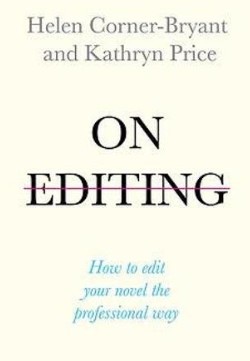
Description:
“Writing a novel is a magical but often difficult journey; and when your first draft is complete, that journey’s not over. As the editing process gets underway, authors often find themselves in unfamiliar territory. What does it mean to ‘map your plot’? How do you know if you’re ‘head-hopping’? When is your novel ready to send out to agents, and how do you make each submission count?
Written by the team behind one of the world’s most successful literary consultancies, On Editing will show you how to master the self-edit. You will learn to compose, draft, and edit while sharpening your writing and ensuring that your novel is structurally sound, authentic, well-written, and ready for submission.
On Editing will help you harness your creative potential, transform the way you think about your writing, and revolutionise your editorial process.”
My review:
I am giving this book a rating of 4 out of 5.
Another excellent resource for writers!
My favourite chapter was about characters, which appears early in the book. It explores some interesting ways to support character development, alongside the editorial considerations every author needs to make when producing a great novel. The chapter on pacing was extremely helpful as well! Plenty of useful advice and examples of the principles in action.
Additionally, I found the chapter titled ‘Show not Tell’ to be packed with fresh, actionable advice about the various ways you can actually utilise this time-worn directive in a book, instead of simply telling a writer to “show not tell”. I found ‘The synopsis’ section insightful, and I’ll definitely be using a structure suggested by the authors, should I end up submitting to a literary agent in future!
One note I have, however, is that the layout/formatting of the book is less engaging than other books about editing. For instance, it’d be helpful if the example text was in a different font to the standard advice/guidance, separating it and making it easier to read. The large blocks of text on each page could be off-putting, particularly to new writers who may not be as familiar with editorial processes.
I also found the repeated use of sentences starting with “However” and “But” a little…tiresome to read. The advice on how to submit to agents by post seems redundant for a contemporary audience, too – given that the majority of literary agencies and publishing companies prefer digital submissions nowadays.
Nevertheless, I’m sure I’ll end up dipping into this resource during future editing sessions – even if it might not be on the top of my pile of editing advice books.
I’d highly recommend this book for any writer, though feel that more experienced writers would benefit from it most – since a lot of the advice assumes you already have a full manuscript ready to be edited.
Read in: May 2026
Format: Paperback
I’m including the date and format in which I experienced this book for transparency, since whatever is going on in the world (and a reader’s private life) at the time of reading, along with a book’s reading format, can impact an individual’s enjoyment or experience of certain content.
Disclaimer: I purchased this book. All opinions expressed in this review are mine and have not been influenced by the authors or publisher in any way. This book review does not contain affiliate links.
Review of Self-Editing for Fiction Writers by Renni Browne and Dave King
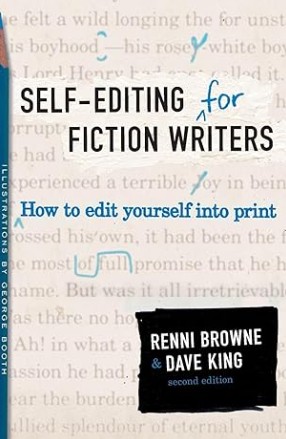
Description:
“Hundreds of books have been written on the art of writing. Here at last is a book by two professional editors to teach writers the techniques of the editing trade that turn promising manuscripts into published novels and short stories.
In this completely revised and updated second edition, Renni Browne and Dave King teach you, the writer, how to apply the editing techniques they have developed to your own work.
Chapters on dialogue, exposition, point of view, interior monologue, and other techniques take you through the same processes an expert editor would go through to perfect your manuscript.
Each point is illustrated with examples, many drawn from the hundreds of books Browne and King have edited.”
My review:
I am giving this book a rating of 5 out of 5.
** It’s important to note that this Second Edition was published in 2004, so it is over 20 years old, and there may be some minor aspects of it that don’t reflect the world we live in today. **
An amazing resource for writers, whether you’re writing with the intention of self-publishing or pursuing the traditional publishing route.
I found the examples provided illustrated each chapter’s content well, and offered a useful framework upon which to base the editorial phases of my own works. The exercises are super helpful to support a writer’s understanding of each chapter, too! I also appreciated the checklists, which can be used over and over when editing different manuscripts, enhancing this book’s value.
The chapters titled ‘Show and Tell’ and ‘Proportion’ were the ones I found the most significant at helping with my own writing, though each chapter offered something insightful that will inevitably improve my writing and editing style moving forward.
My favourite quotes include, “You don’t want to give your readers information. You want to give them experiences.” (p.16) and “Fred Astaire worked tirelessly to make dancing look like the easiest, most natural thing in the world. And that’s what you’re trying for – a level of effectiveness that can make what was hardest to achieve look effortless.” (p.208).
There was plenty of humour woven through this book as well, which made it even easier to read – for instance, the last sentence on p.206 of the paperback made me laugh (though I won’t repeat it here because that’d be inappropriate – you’ll just have to discover it for yourself! Haha).
Read in: June 2026
Format: Paperback
I’m including the date and format in which I experienced this book for transparency, since whatever is going on in the world (and a reader’s private life) at the time of reading, along with a book’s reading format, can impact an individual’s enjoyment or experience of certain content.
Disclaimer: I purchased this book. All opinions expressed in this review are mine and have not been influenced by the authors or publisher in any way. This book review does not contain affiliate links.